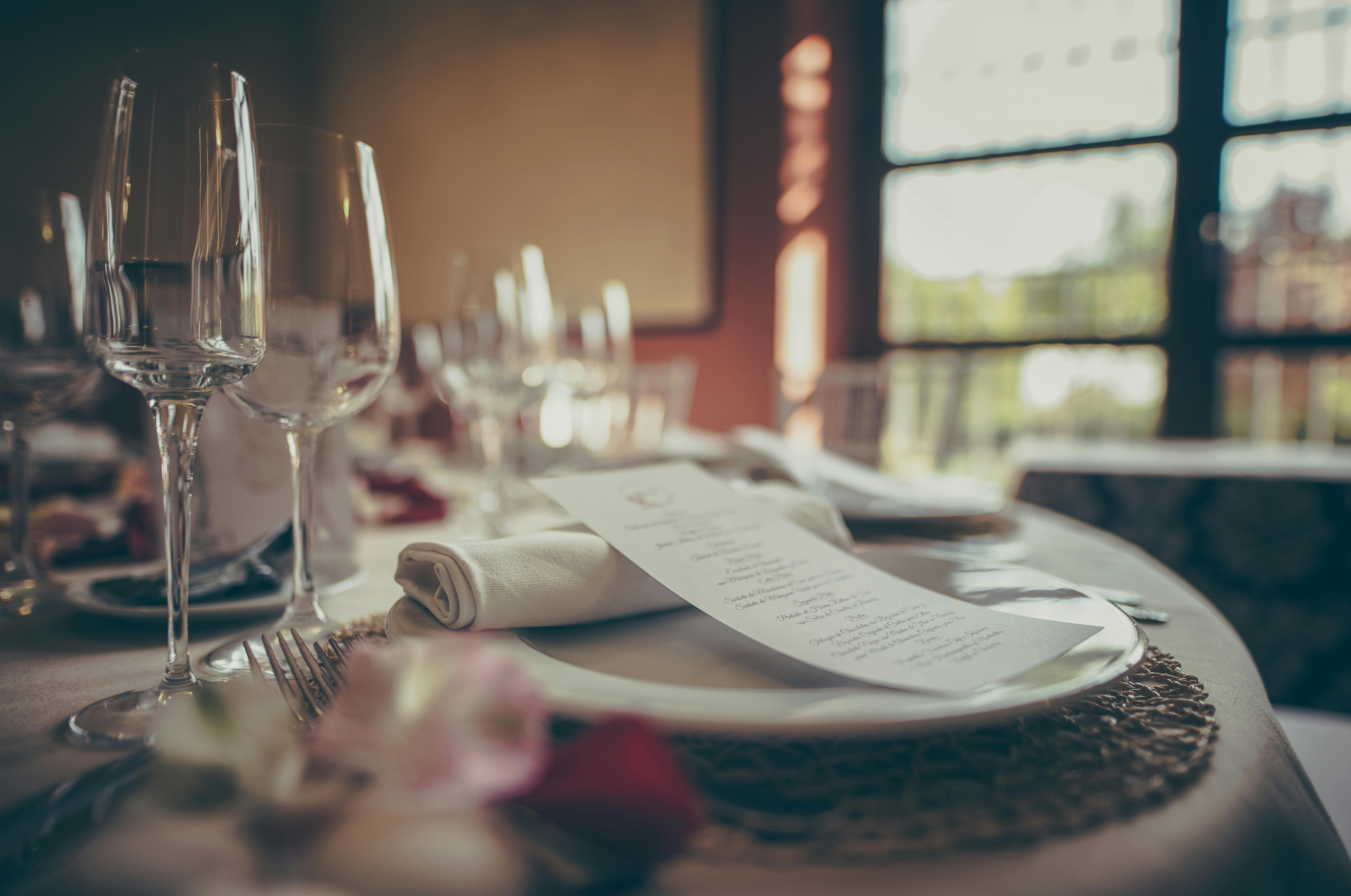
The Restaurant Has 10 Dishes. The Wine List Has 100 Bottles. So Why Does Nobody Analyse the Wine?
Restaurants spend an extraordinary amount of time thinking about food. Chefs develop dishes, test ingredients, adjust recipes, change menus with the seasons and agonise over details that most diners will never even notice. Ingredients are selected, suppliers are assessed and combinations are tried, rejected and tried again until the menu feels right.
And then there is the wine list.
It might contain 50, 80 or even 100 bottles, alongside a selection of glasses and carafes, all carrying different prices, producers, regions, grapes, vintages and ratings. Yet when we talk about restaurant quality, the conversation is overwhelmingly about the food.
That isn't necessarily because the wine list is unimportant. It is because wine is much harder for the average diner to evaluate.
Research and commentary from the wine industry have repeatedly highlighted the imbalance. Decanter has previously highlighted how wine can be woefully underserved by restaurant critics, despite its ability to influence the overall dining experience. The Good Food Guide also recognises that a great wine list involves thoughtful selection, food matching and customer-friendly pricing.
And that is precisely where SavvySipper becomes useful.
Food Is Personal. Wine Has More Data.
There is no universally correct restaurant menu.
A chef might create a dish because they love a particular ingredient, because it works beautifully with the season, because a supplier has found something exceptional, or simply because they have spent weeks experimenting until they believe they have got it right.
Whether you actually like it is another matter entirely.
Food is inherently subjective. One person's sublime combination of flavours is another person's reason to quietly order the chips.
Wine is subjective too, of course, but a wine list contains a remarkable amount of information that can be analysed.
There is a producer. A grape variety. A region. A vintage. A bottle size. A restaurant price. A retail price. A serving size. A community rating. And, importantly, a relationship between all of those things.
That makes a restaurant wine list a rather different proposition.
Wine-Searcher, for example, exists specifically to help consumers and trade professionals compare wine prices and availability across retailers. That sort of market information is precisely the kind of reference point that becomes useful when trying to understand what a restaurant wine actually represents in terms of value.
The Wine List Is a Much Bigger Decision
Consider a typical restaurant. Perhaps there are ten main courses on the menu. You can read the descriptions, ask the waiter, look at the ingredients and make a decision based on what sounds appealing.
The wine list, meanwhile, might contain 100 bottles.
Suddenly you are being asked to make a choice from a list many times larger, often using considerably less familiar information.
Should you choose the £28 bottle or the £36 one? Is the £42 wine actually better? Would the £12 glass be sensible if you might have three? Is the £25 bottle good value compared with the £45 option? Does that highly rated wine actually work with the food you've chosen?
These are not questions a restaurant menu necessarily answers.
And nor should it.
The restaurant's job is to create the wine list. SavvySipper's job is to help the diner understand it.
Restaurants Curate Their Wine Lists. SavvySipper Analyses Them.
A wine list can be curated in several ways.
The restaurant may select it themselves. A sommelier or wine buyer may build it around the chef's menu and the restaurant's style. A wine merchant or wholesaler may help develop the range. Sometimes it is a combination of all three.
There is usually considerable thought behind the selection.
But once those wines reach the list, they become something else as well: data.
The restaurant has chosen the wines. The consumer has to choose between them.
SavvySipper sits in that gap.
We analyse the available information and help the diner understand the relationship between price, ratings, serving size, retail benchmarks and potential food pairings.
It doesn't replace the restaurant's expertise. It gives the diner another layer of information.
That distinction matters. SavvySipper isn't attempting to tell a chef or sommelier which wines belong on their list. It is helping the customer make sense of the list that is already in front of them.
The Menu Changes. The Wine List Often Doesn't.
There is another important difference between a restaurant's food menu and its wine list.
Restaurant food menus can change frequently. Seasonality plays a major role. Ingredients come in and out of availability. Chefs develop new dishes. Suppliers change. Specialities appear. Popular dishes remain while less successful ones quietly disappear.
The wine list tends to have a different rhythm.
There are certainly changes, particularly when stock runs out, suppliers change or a restaurant decides to refresh its selection. But a restaurant may continue selling the same wine for considerably longer than it serves a particular dish.
That creates an interesting relationship between the two.
The food might change with the season. The wine may remain.
The question then becomes: how well does the wine list continue to serve the food, and how well does the pricing continue to serve the customer?
That is one reason wine-list analysis can be so useful. The list is not simply a supporting cast member to the food menu. It is a substantial product offering in its own right.
A Hundred Wines Creates a Hundred Decisions
This is where the scale of the problem becomes apparent.
If a restaurant has ten main courses and a hundred wines, there are potentially hundreds of combinations a diner could consider before even getting into glasses, carafes, bottles, vintages and price points.
Nobody expects a restaurant guest to perform that analysis manually.
You could spend half an hour with a spreadsheet, a retail website and several wine-rating platforms, but by that point your dining companions will probably have ordered dessert.
Technology is rather better suited to this sort of thing.
SavvySipper is designed to take the information on a restaurant wine list and turn it into something more useful at the point of decision.
Ratings Add Another Layer of Information
Price is only one part of choosing a wine.
When a bottle is unfamiliar, community ratings can provide another useful reference point. Vivino's rating system is built around ratings from its wider wine-drinking community, creating another source of information alongside professional reviews, producer information and personal recommendations.
That doesn't mean a rating tells you whether you will personally love a wine. Wine remains stubbornly subjective, which is probably part of its charm.
It does, however, give the diner another piece of information when faced with an unfamiliar label.
SavvySipper brings that information into the wider analysis, helping you consider ratings alongside restaurant pricing, wine style, serving size and food pairing rather than relying on any single number.
The Price Matters. But It Isn't Everything.
Price is obviously part of the equation.
Nobody wants to pay more than necessary, but value isn't simply a race to the bottom.
A £30 bottle isn't automatically better value than a £20 bottle. Equally, a £60 bottle isn't automatically poor value simply because it costs twice as much.
The interesting question is what you receive for the difference.
Restaurant wine mark-ups can vary considerably between venues and across individual wine lists. Decanter has examined the long-running debate around restaurant wine mark-ups, while more recent analysis of hundreds of restaurant wine lists has also demonstrated just how widely pricing can vary.
SavvySipper looks at restaurant pricing alongside other available signals so diners can identify where the list appears to offer compelling value.
Sometimes that may mean choosing the cheaper bottle.
Sometimes it may mean spending considerably more.
The useful bit is knowing why.
And Then There Is the Glass
The bottle isn't the only place where restaurant wine pricing gets interesting.
Glass sizes can create their own little mathematical puzzle.
A restaurant might offer 125ml, 175ml or 250ml servings alongside 500ml carafes and 750ml bottles.
The obvious assumption is that ordering by the glass provides flexibility.
Often it does.
But flexibility and value are not necessarily the same thing.
Four glasses of a 175ml wine would amount to 700ml, leaving only 50ml between that total and a standard 750ml bottle. The question is whether the combined glass price makes sense compared with the bottle price.
SavvySipper's analysis of serving sizes helps diners understand how the economics change between the glass, carafe and bottle.
Because occasionally the most sensible question on the wine list isn't "Which wine should I choose?"
It's "Which format should I buy?"
Wine Pairing Matters Too
A wine list does not exist independently of the kitchen.
The best restaurant wine programmes understand the relationship between the food and the wine, whether that means classic pairings, unexpected combinations or simply giving diners enough choice to find something that suits their meal.
The Good Food Guide's advice on ordering wine in restaurants similarly emphasises the importance of considering what you are eating when choosing a bottle.
SavvySipper therefore looks beyond price alone. A wine might be fairly priced and highly rated, but if it doesn't suit what you are eating, it may not be the most useful recommendation for that particular meal.
Value is about more than the number on the menu.
It Isn't About Telling Restaurants What Wine to Sell
This distinction matters.
SavvySipper isn't there to decide what a restaurant's wine list should look like.
A great restaurant should have a point of view. Its wine list might be deliberately unusual. It might focus on small producers, natural wines, regional specialities, classic estates or wines selected specifically around the chef's cooking.
That is part of the restaurant's identity.
SavvySipper doesn't need to replace that.
Instead, it can help answer a different question:
Given the wines this restaurant has chosen, which ones represent the most interesting choices for the diner?
That is a much more useful proposition.
The Wine List Deserves Its Own Attention
Restaurants are rightly judged on their food.
The ingredients, cooking, presentation, service and overall experience all contribute to the reputation they build.
Wine is part of that experience too.
A carefully constructed wine list can elevate a meal, introduce diners to something memorable and provide another expression of the restaurant's personality.
But it is also a substantial amount of information for a customer to navigate.
That's the gap SavvySipper is designed to fill.
We don't tell you what you should like.
We don't tell restaurants what they should charge.
We don't believe the most expensive bottle is automatically the best, or that the cheapest is automatically the smartest.
We simply make the restaurant wine list easier to understand.
And when there are dozens, sometimes hundreds, of bottles competing for your attention, that can be rather useful.
The Savvy Verdict: A restaurant may have spent weeks perfecting its dishes, but its wine list can contain dozens or even hundreds of decisions of its own. SavvySipper exists to bring a little more clarity to the part of the menu that has traditionally been left to guesswork.